TRAILER

THE DOCUMENTARY
Paragami – To the Other Shore
Filmed across Thailand, Cambodia, and Sri Lanka, Paragami – To the Other Shore moves through the spiritual landscapes of women tracing new paths of devotion, resilience, and quiet transformation within Theravada Buddhism.
The film weaves together the story of three Bikkhunis: Bhikkhuni Jutindhara, returning to Cambodia to help establish the country’s first Bhikkhuni monastery and training center; Ayye Kamala who set up a Bikkhuni Monastery in southern Thailand and is training many nuns and Bikkhunis and Venerable Saccadharani, a former Christian from the UK seeking full ordination in Sri Lanka.
Through immersive soundscapes, textured imagery, and a meditative rhythm, the film invites viewers into the sensory textures of monastic life: bells and chants, sweeping and alms rounds, the silence of dawn.
Rather than explaining, it listens, revealing the quiet strength and beauty of lives lived beyond normative gender expectations.
Paragami is not a journalistic investigation. It is a poetic and contemplative cinematic experience in docu-reality style, following the rythm and lives of the monastics and revealing through it the subtle differences in their daily practices.
Who
Ayye Kamala
Bhikkhuni Dhammakamala, also known as Ayye Kamala, is a Thai Theravada
Bhikkhuni and the founder and chief abbess of Tippayasatan Dhamma Bhikkhuni Arama in Southern Thailand. She received full ordination in Sri Lanka in 2014, following the path opened by her teacher, Dhammananda Bhikkhuni, a pioneer of the Bhikkhuni revival in Thailand. She is currently pursuing a Ph.D. in Buddhist Peace Studies.
At her monastery, she teaches, trains novice nuns, organizes temporary ordinations for women, and provides spiritual guidance. Her work extends beyond the monastic community: she cares for women in the late stages of cancer, supports orphanages, shelters abandoned animals, and actively promotes peace and reconciliation in Thailand’s southernmost provinces. A member of the Sangha for Peace Project and the International Network of Engaged Buddhists (INEB), she embodies an engaged Buddhist approach, openly supporting LGBTQI+ rights and creating an inclusive space for marginalized communities.
The documentary follows her daily leadership, her journey to Sri Lanka for the full ordination of two samaneris, and her trip to Laos, where she and her community learn traditional mural painting to inscribe their stories on the walls of their monastery, still under construction.
Ayya Jutindhara
Ven, Bhikkhuni Jutindhara returns to Cambodia with the aim to create the country’s first Bhikkhuni monastery—a pioneering step for Cambodian Buddhism.
Having lived 20 years in Germany, where she was married before ordaining at Anenja Vihara Monastery, she brings with her the advantage of a European passport.
In Cambodia’s traditional and male-dominated Buddhist structure, her Western asso- ciation grants her a credibility that local women often struggle to attain, underscoring the dual forces of Western influence and Cambodian patriarchy.
Currently, only one Cambodian Bhikkhuni (also holding a foreign passport) resides in Cambodia, living alone in a private house given to her by lay supporter. Ayya Jutindhara wish to create a safe place for women to practice and ordain.
We follow her as she travels to Mondulkiri province to visit and abandonned monastery that a khmer monk recommended her during a pilgrimage in India.
For the moment she is based at the famous Cambodian Buddhist Center where the chief Monk supports her.
Venerable Saccadharani
Ven. Saccadharani, a former Christian and QiGong practitioner, spent 20 years in Cyprus before beginning her Buddhist journey. She started as a Mae Chi in 2015, practicing in a remote cabin in northern Thailand for seven years until undergoing her Pabbajja (novice ordination) in 2022. Since then, she has been practicing at Thippayasathandhamma Bikkhuni Arama, where she teaches English to local Thai children, tends to the monastery’s garden, and cares for the meditation center.
Few foreign monastics complete the entire process of ordination in Thailand, as it is challenging for them to adapt to the new climate, culture, and way of life.
We follow her journey to Sri Lanka for her official ordination as a Bhikkhuni. This highly significant and potentially controversial event takes place at Sakyaditha Temple, offering an invaluable glimpse into the revival of the female monastic movement (Bhikkhuni) and the strong historical and spiritual ties between Sri Lanka and Thailand. Sakyaditha Temple is especially notable for its efforts to empower Buddhist nuns through education, social service, and disaster relief, fostering their roles as spiritual and social leaders in Sri Lanka.
After the ordination, she is looking for a new monastery to settle in Sri Lanka to meditate, learn and practice the Vinaya (monastic rules and ethiquette established by the Buddha).
-
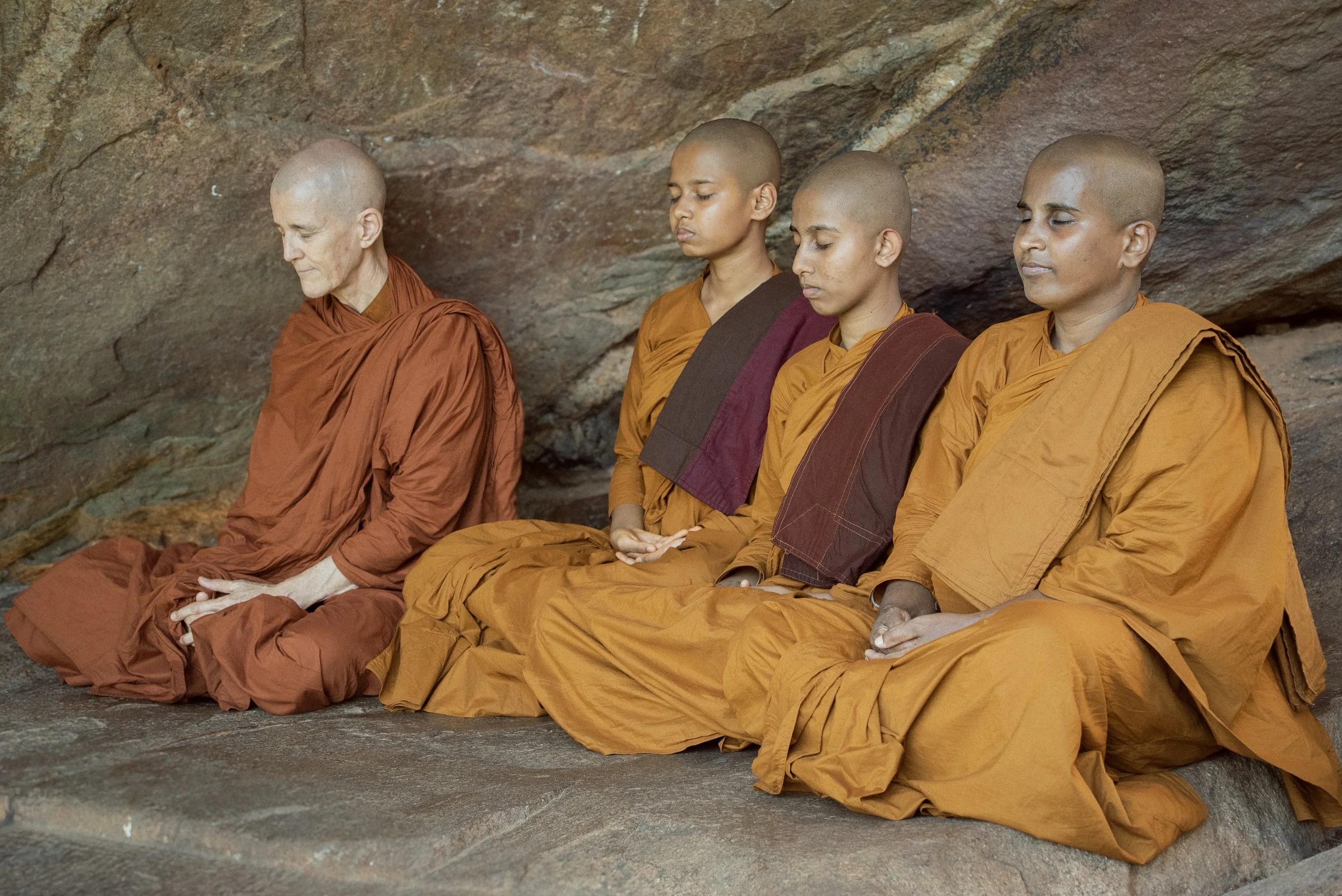
![Bikkhuni and 3 Samaneris sitting eyes closed in a cave in Sri Lanka]()
Ven. Saccadharani meditate in an ancient cave during a pilgrimage at Anuradhapura with 3 Sri Lankan Samaneris
-
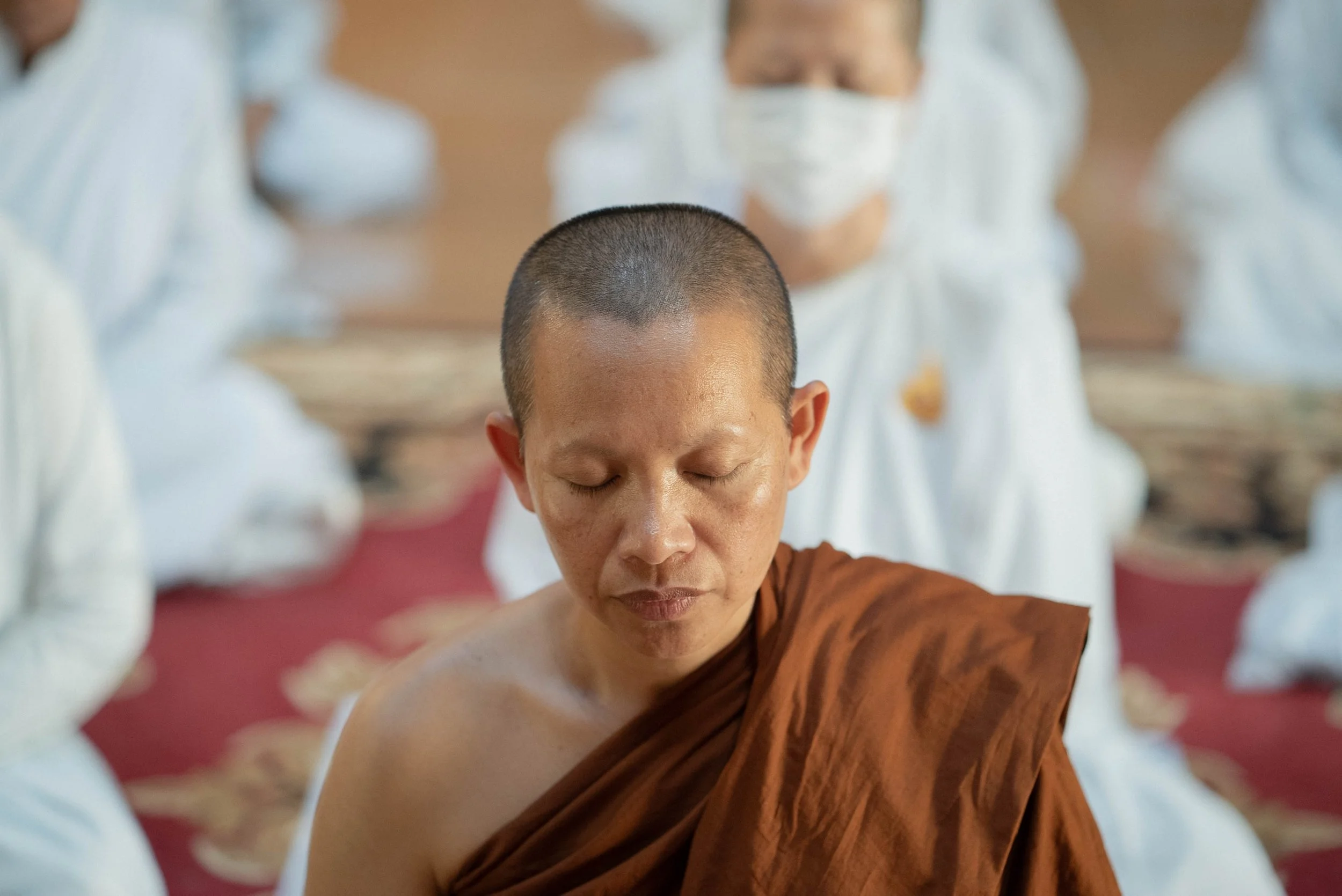
![Bikkhuni Ayya Jutindhara meditating with nuns eyes closed in cambodia]()
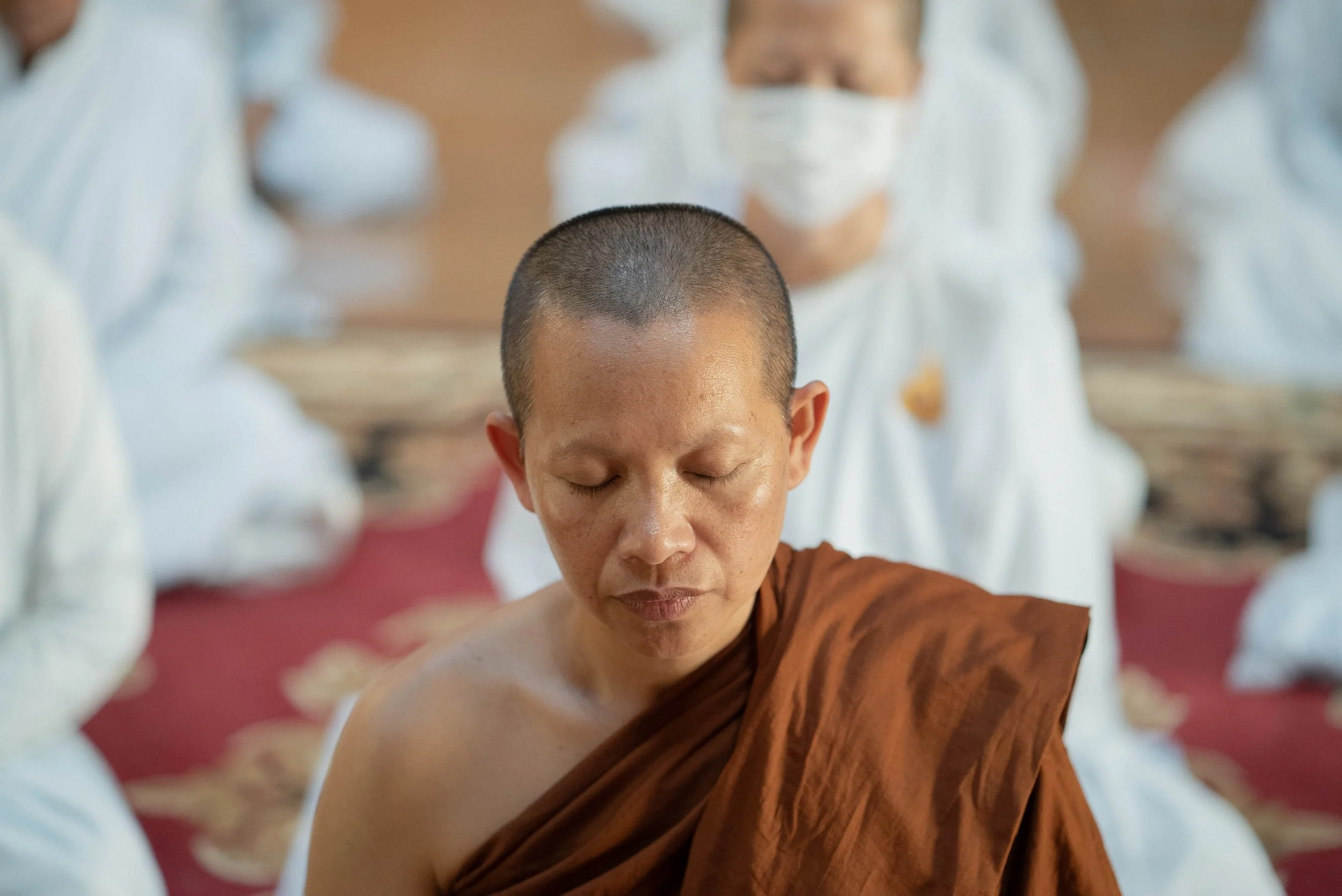
Ayya Jutindhara at International Meditation Center, Cambodia
-
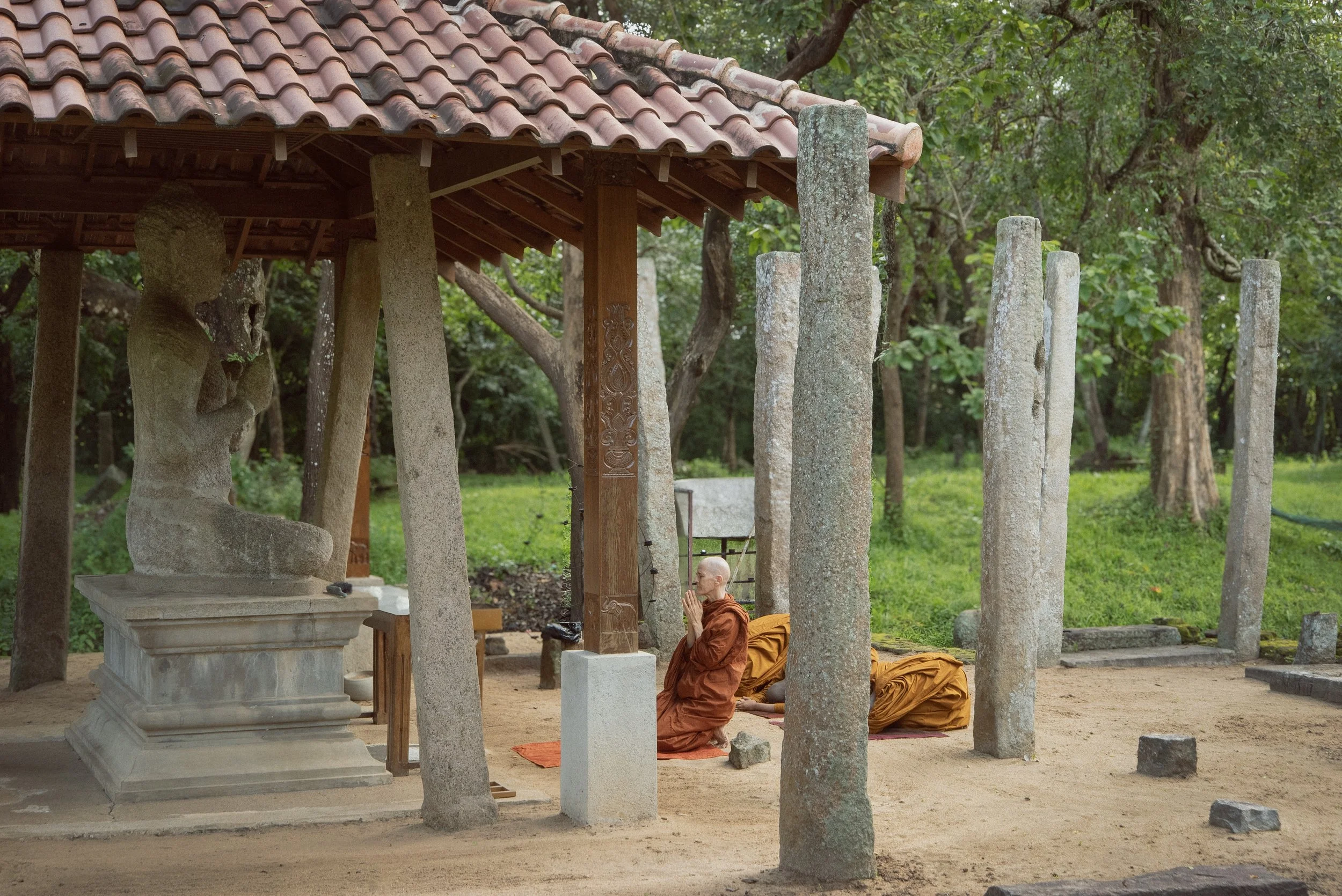
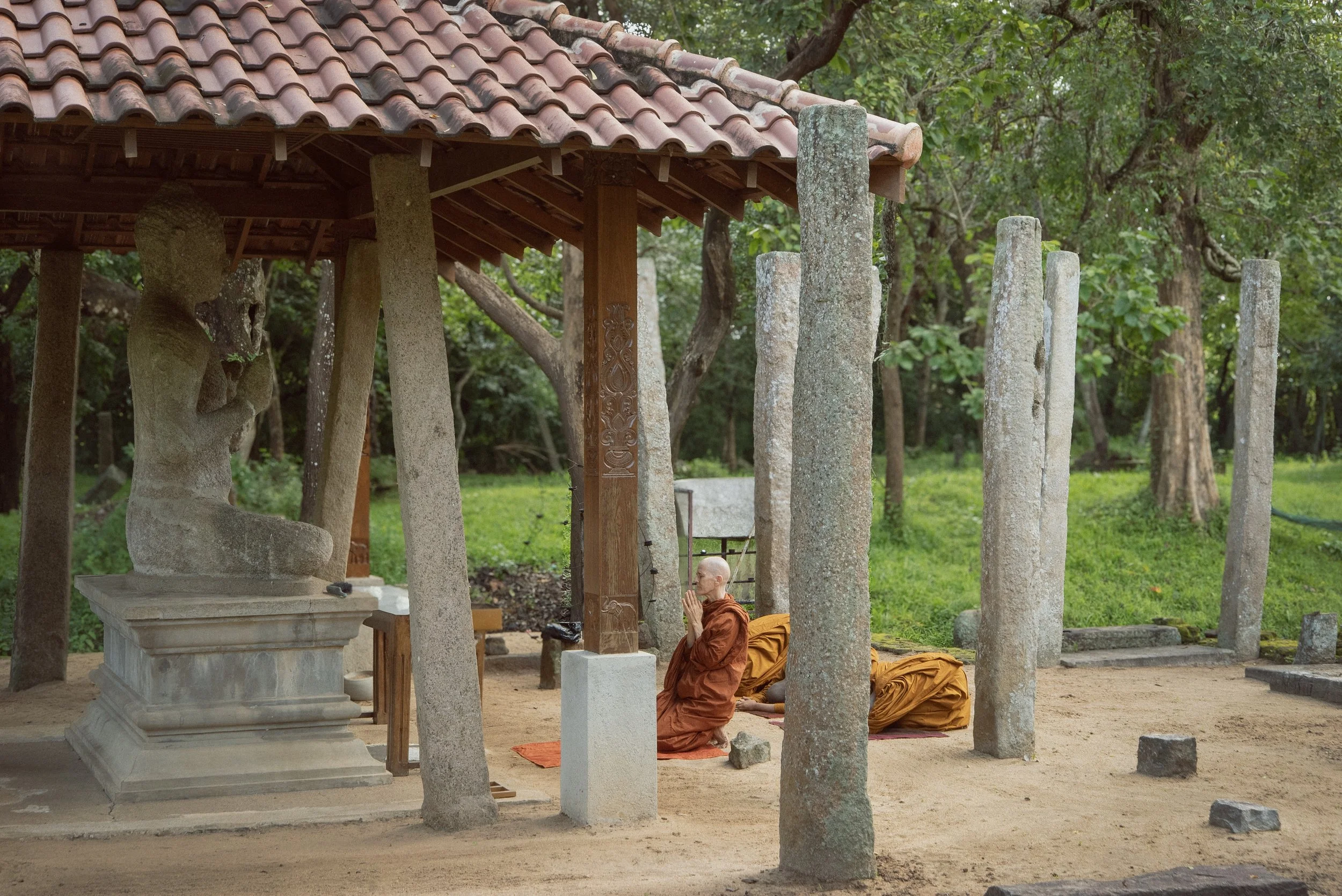
![Ven. Saccadharani is bowing in front of the Buddha statue of the ancient Bikkhuni Monastery Pankuliaya Ashokaramaya in Anuradhapura]()
Ven. Saccadharani is bowing in front of the Buddha statue of the ancient Bikkhuni Monastery Pankuliaya Ashokaramaya in Anuradhapura
-
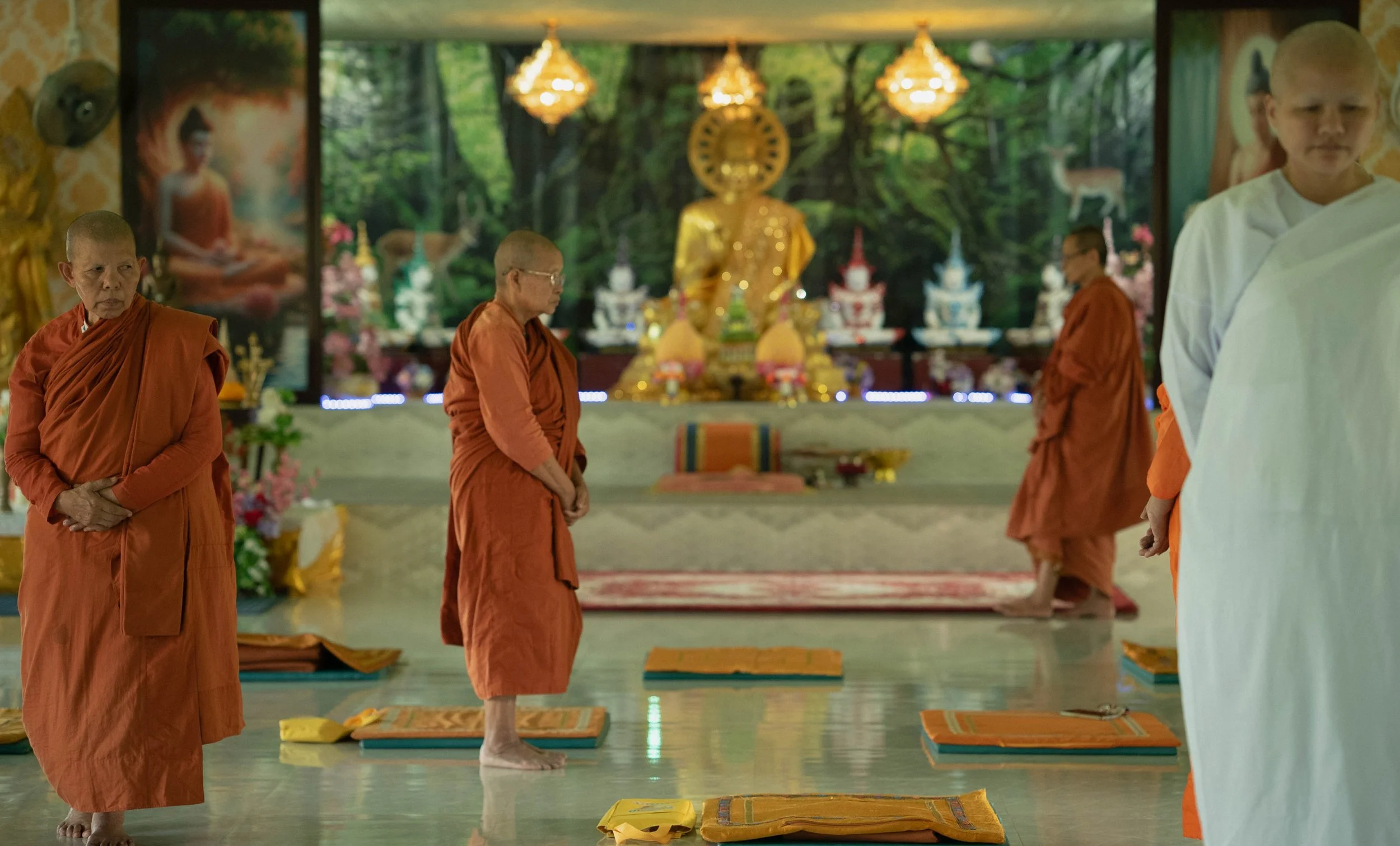
![4 females monks are doing walking meditation at Tippayasathandhamma Monastery in the meditation room in front of a golden Buddha statue]()
Walking meditation at Tippayasathandhamma Monastery
-
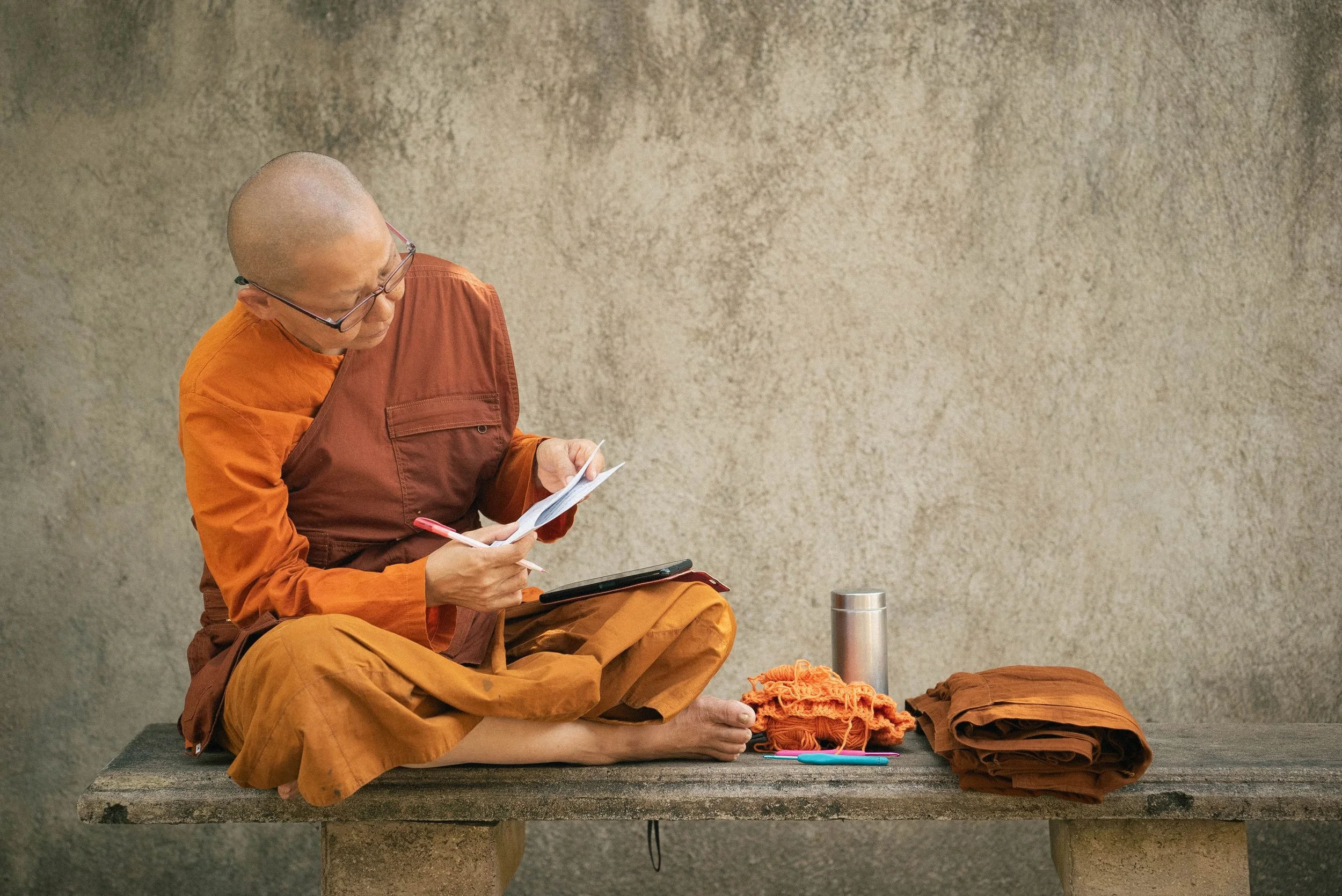
![A monk sitting on a stone bench, wearing orange robes, reading notes and writing with a pink pen, with a thermos, folded clothes, and various colorful items nearby, against a plain, textured background.]()
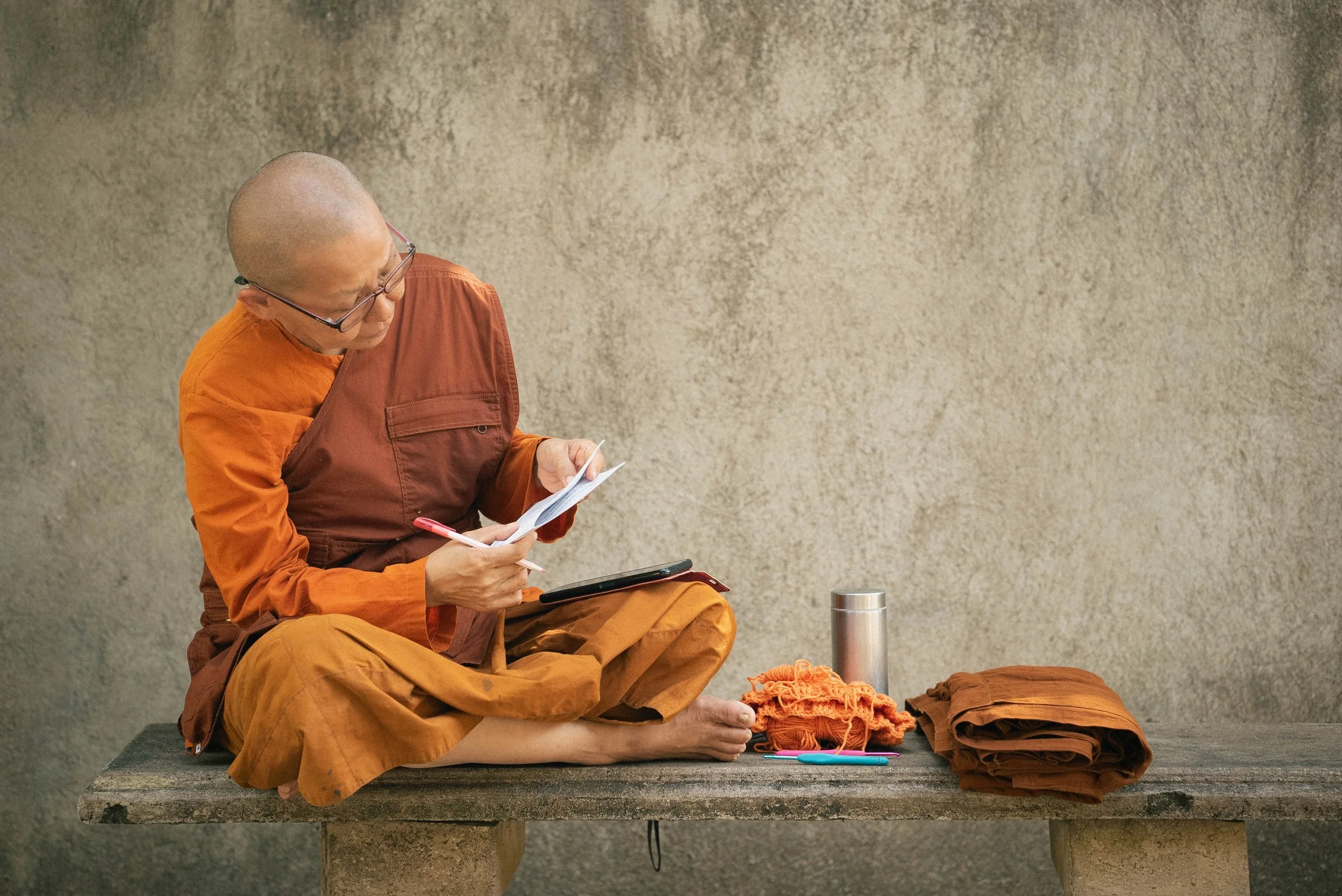
Ayya Kamala rehearse the chants for the Bikkhuni ordination in Sri Lanka
-
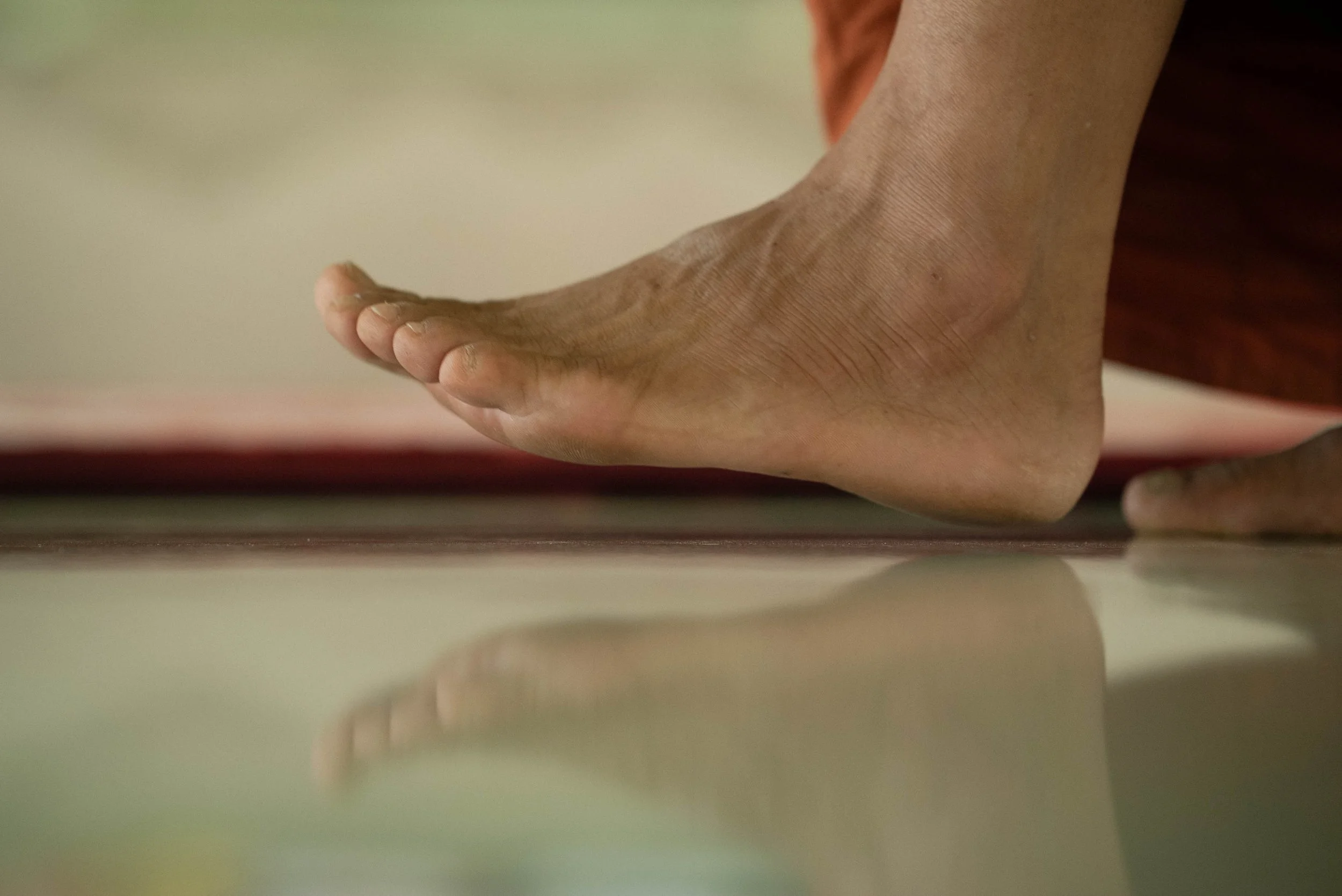
![Close-up of a person's foot flat on the ground, with toes pointing forward, taken from a low angle.]()
Close up on foot during meditation at Tippayasathandhamma Monastery
-
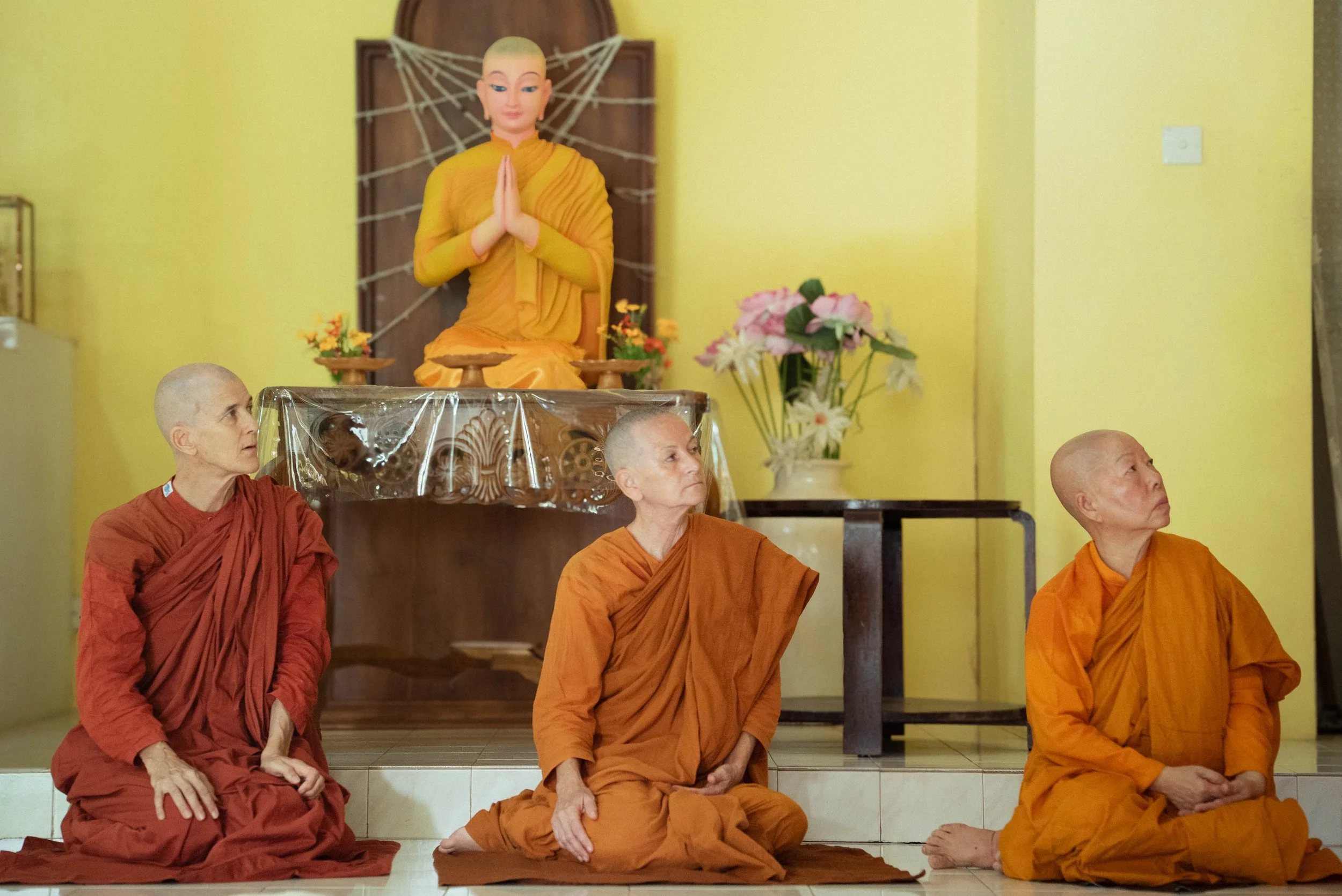
![Three Buddhist nuns in saffron robes praying or meditating in front of a Buddhist statue of a monk in a yellow robe, with hands in a prayer gesture, in a temple setting.]()
Ven. Saccadharani and Ven. Ariyamangala are listening to Ven. Vijithananda singing the ordination chant at Sakyadhita Monastery in Sri Lanka
-
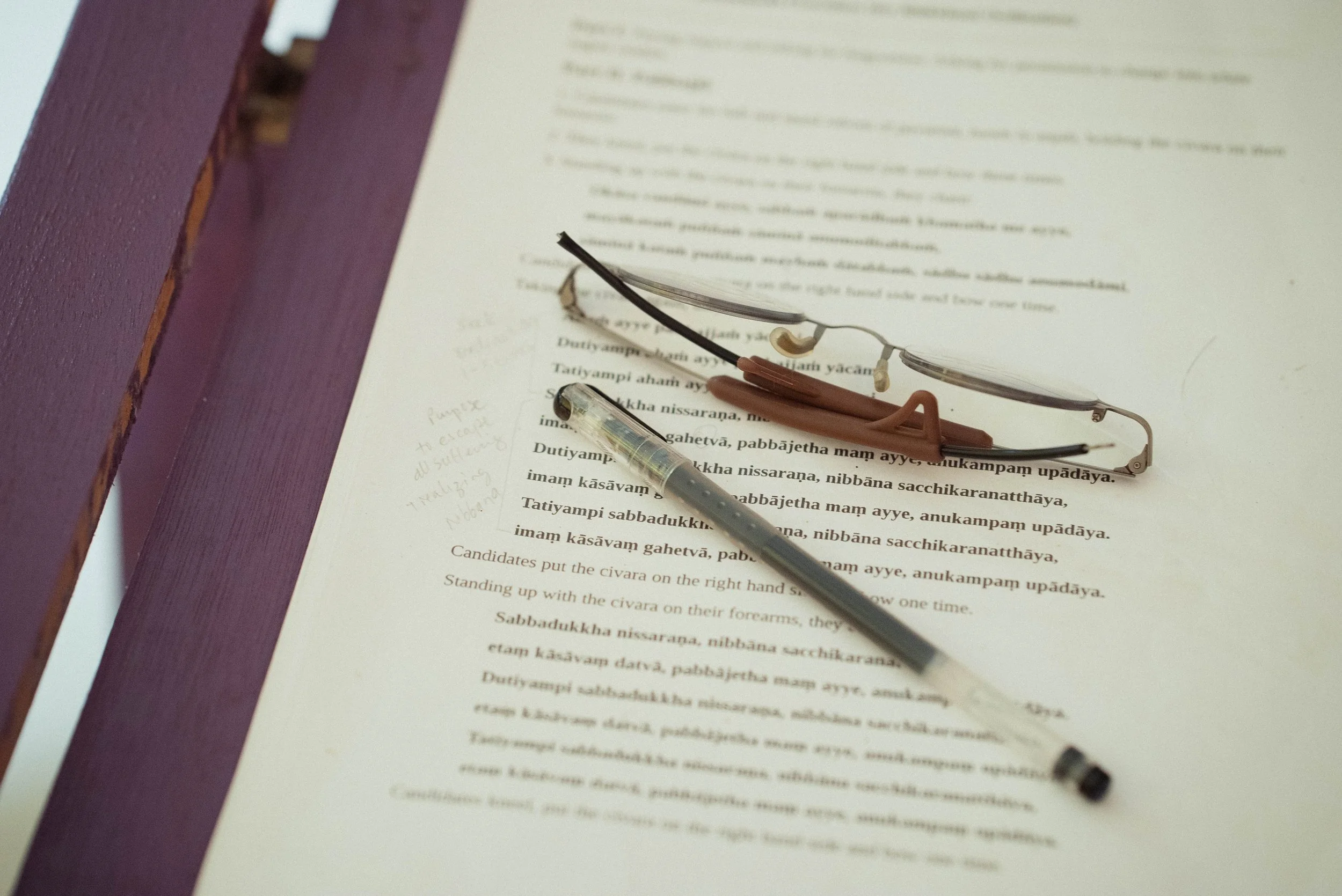
![A pair of eyeglasses and a pen resting on a document with writing, inside a purple folder.]()
Pali chant for the Bikkhuni Ordination
-
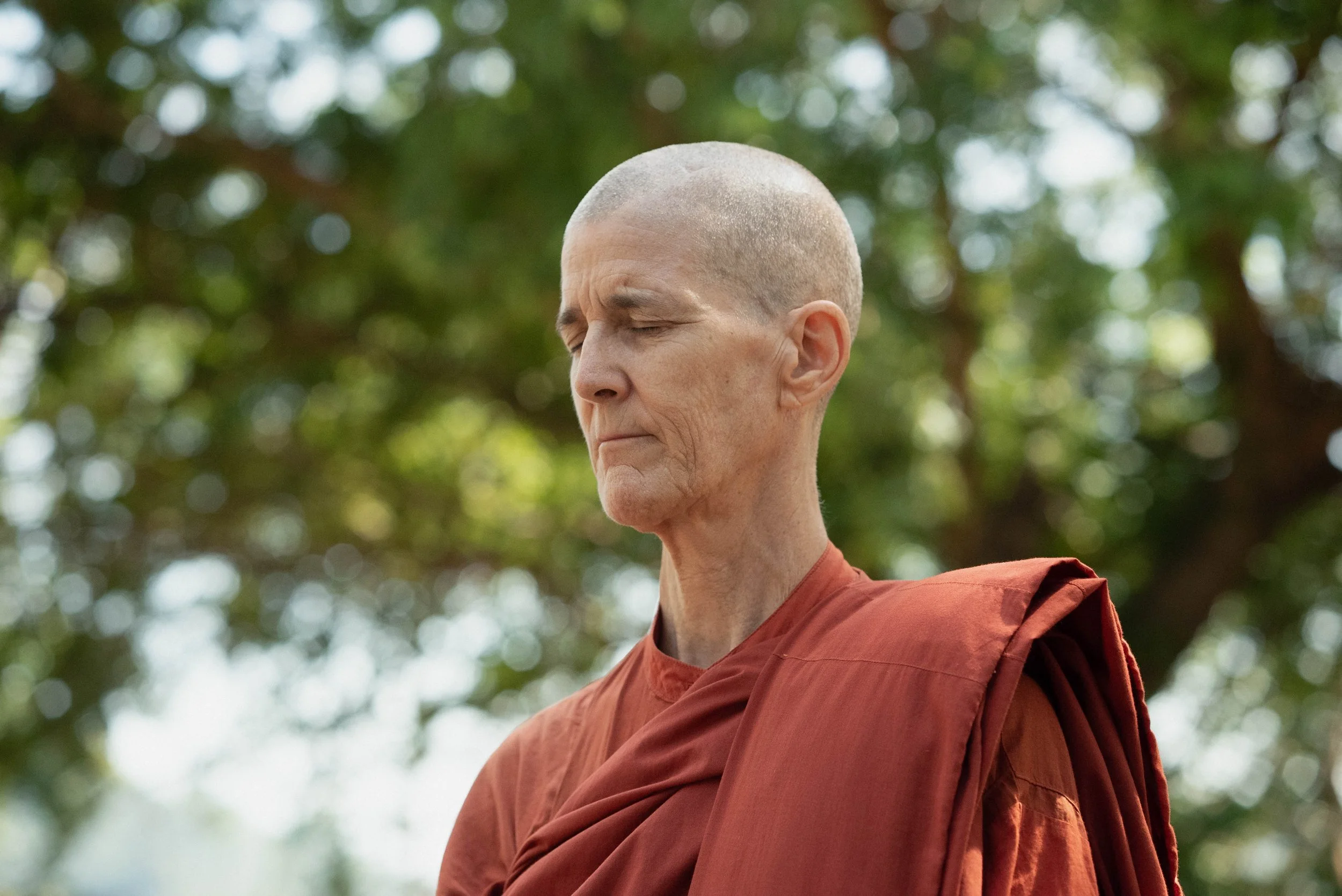
![A Buddhist monk wearing traditional saffron robes standing outdoors with eyes closed, head slightly bowed, and a serene expression, against a background of blurred green trees.]()
Ven. Saccadharani meditating on Koh Yo, southern Thailand
-
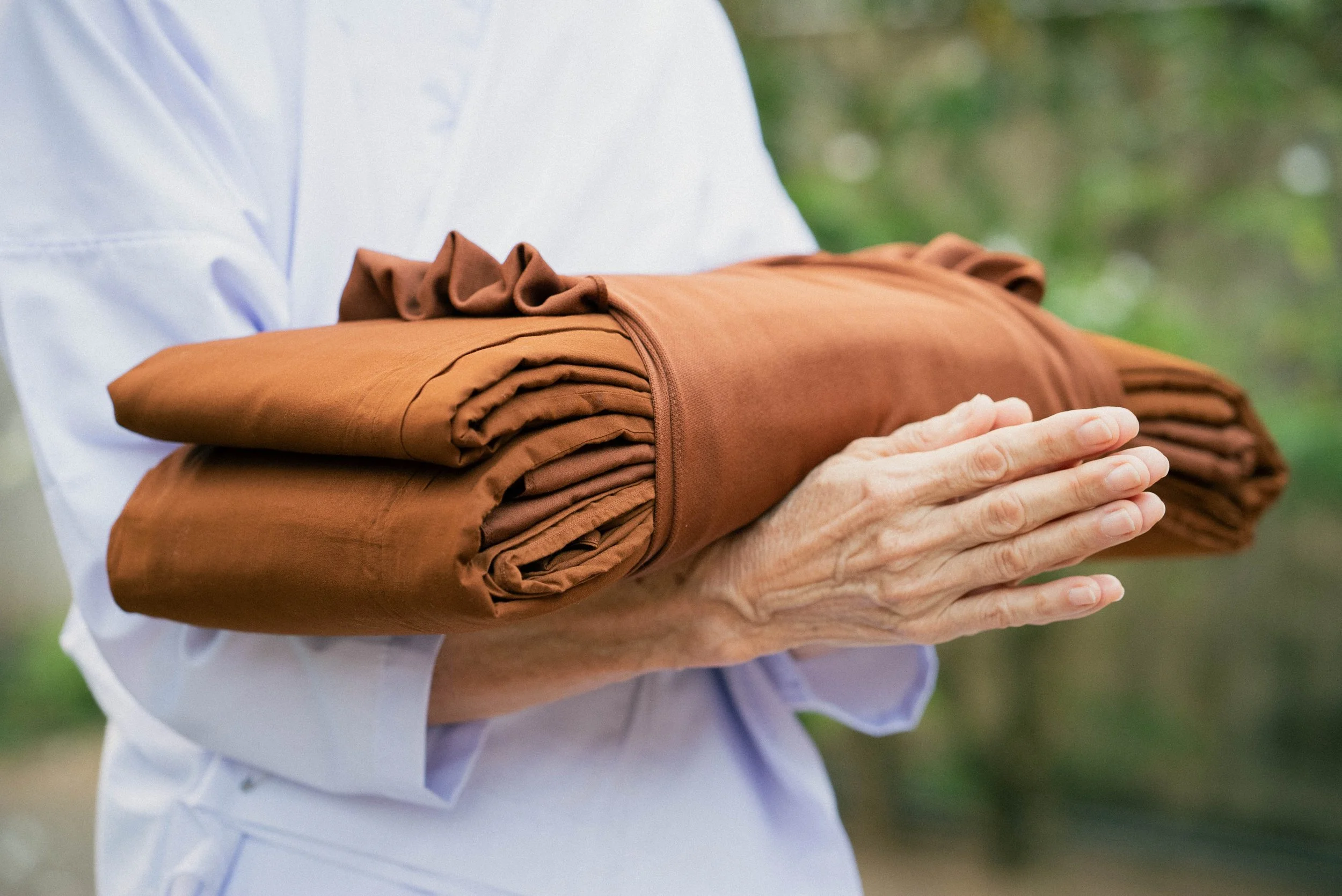
![Person holding folded brown fabric or a blanket outdoors.]()
Close up on the hands of Ven. Saccadharani waiting to be ordained in Sakyadhita Monastery, Sri Lanka
-
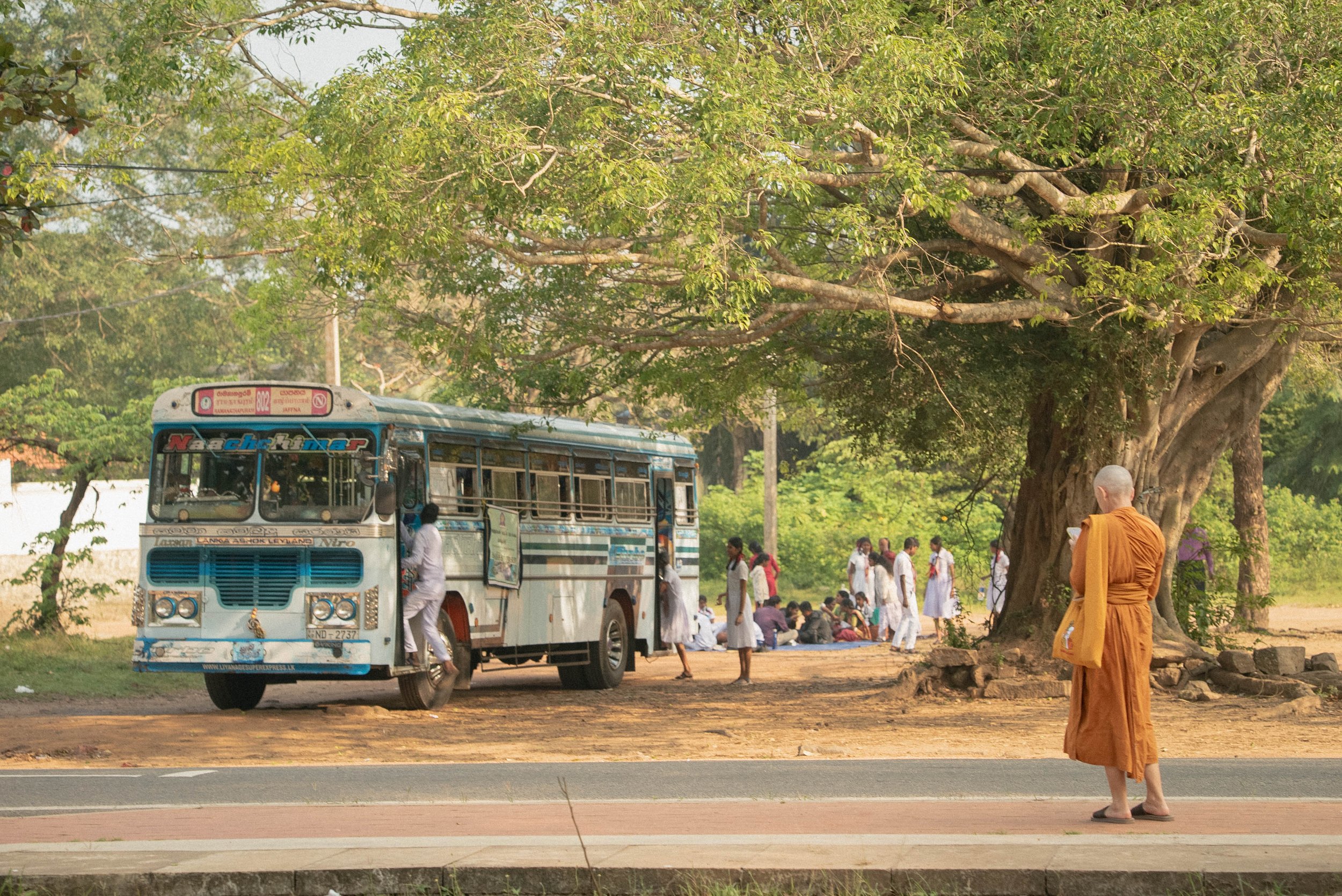
![A bald monk in traditional orange robes walking along a sidewalk under a large leafy tree, with a group of people sitting and standing nearby and a blue and white bus parked on a dirt area.]()
Ven. Ariyamangala waiting by the bus station in Anudharapura, Sri Lanka
-
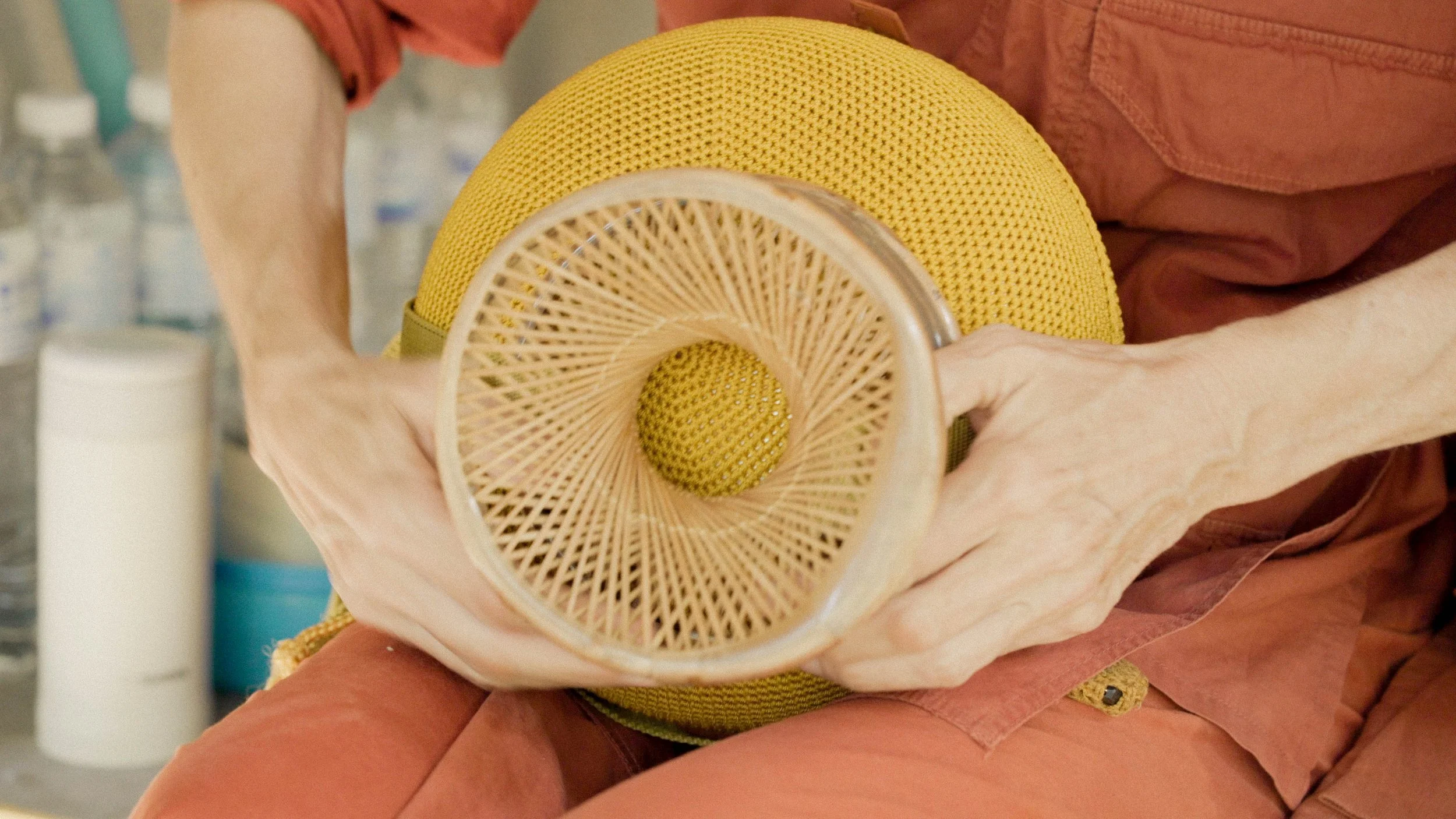
![A person holding a yellow portable speaker with a woven bamboo diffuser cover inside. The background shows water bottles and a white container.]()
Ven. Saccadharani is preparing her bowl after eating, washing and drying it.
-
![Ayya Jutindhara with Upasaka in a monastery in Mondulkiri Province, Cam]()
New List Item
-
![A Buddhist monk wearing orange robes sitting outdoors, with a blurred background that includes trees and a building.]()
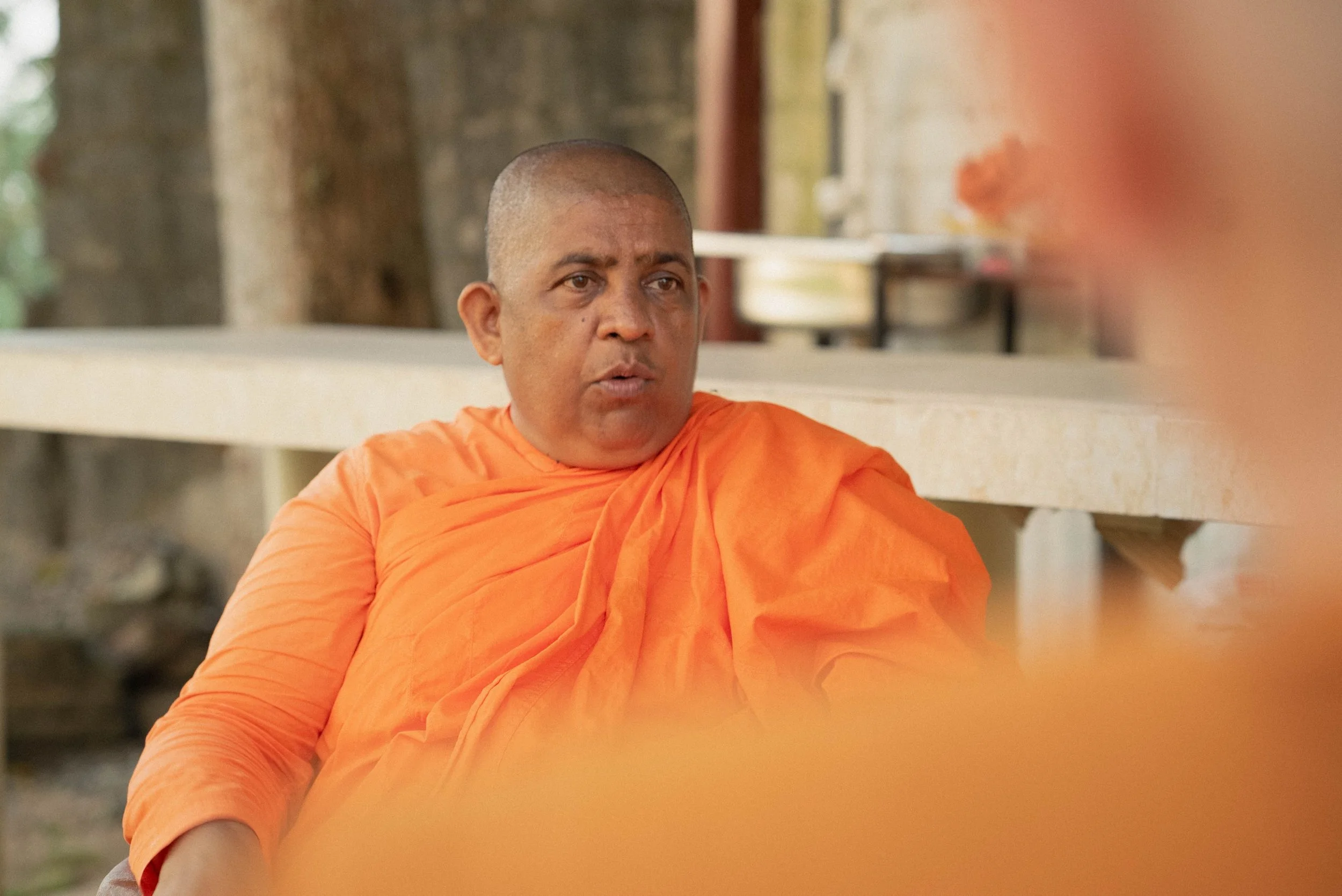
Ayya Vijithananda from Sakyadhita Monastery is talking about Bikkhuni history as part of the Bikkhuni training